

Looking for a Soccer coaching job in London? Read this before you search any further.
There are likely many soccer coaching job opportunities in London right now – like there always are in this fantastic, soccer crazy city. The difference between them is that while some will allow you to help develop children’s soccer skills in a progressive manner and help you refine your own soccer coaching philosophy, others will want you to continuously churn out tired drills in the role of a glorified babysitter.
WMF Coaching Team
8 min read
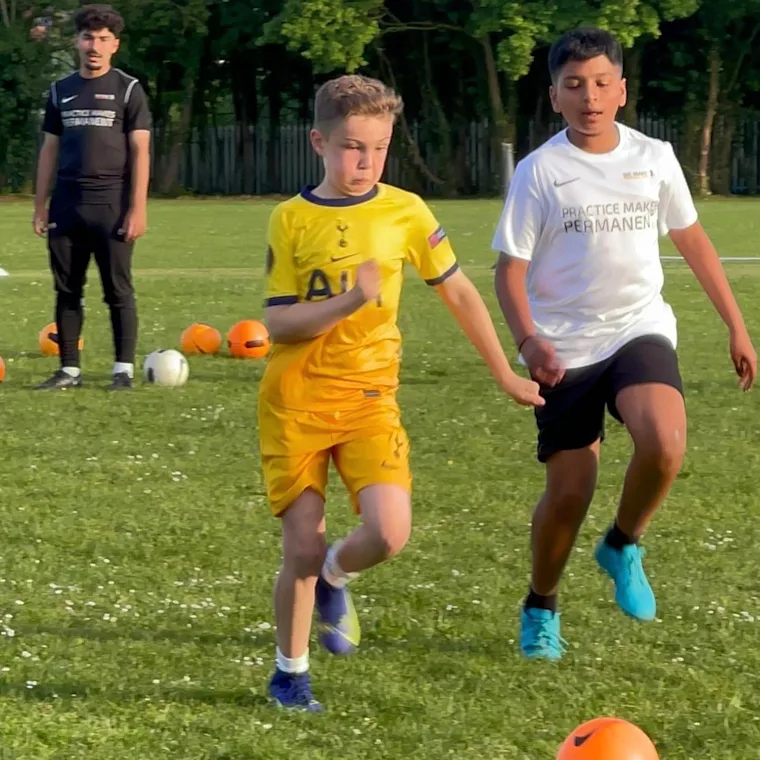
There are likely many soccer coaching job opportunities in London right now – like there always are in this fantastic, soccer crazy city. The difference between them is that while some will allow you to help develop children’s soccer skills in a progressive manner and help you refine your own soccer coaching philosophy, others will want you to continuously churn out tired drills in the role of a glorified babysitter.
Chances are, the reason you are on this page is because you have searched for a term like ‘soccer coaching job in London’ in Google, seen this post on our social media pages or have seen our soccer coaching jobs posted on a job board. Well if you are looking to be a soccer coach, we would firstly like to say congratulations! We say this as you are helping develop children into the best footballers they can be, which is our shared mission and what we love to do day in day out.
We have written this article to try to help you think about what matters to you as a soccer coach. We hope you have already considered these questions but if not ask yourself the following:
TIP: Write notes down of the thoughts that come to mind while you consider these questions. Anything at all. Yep – even about that soccer playing llama you saw on holiday last year. Getting your thinking out of your head and onto paper may help you realise some of the aspects of soccer coaching that are most important to you.
- Why do I want to be a soccer coach?
- When did I start wanting to be a soccer coach - and why then?
- Where do I want soccer coaching to take me? What doors should it open?
- What are my values? What soccer coaching job would best suit my life values?
- What kind of soccer coaching job best suits my lifestyle? i.e. personal soccer coach, soccer coach in a company, soccer coaching job in a professional academy etc.
- Do I want to coach younger children, older children or adults? If I am clear on which - why that age group?
- When I think of the best soccer coaches I had in life, what qualities did they have? Also – how did they make me feel? What would I imitate from them?
- When I think of the worst soccer coaches I had, what short comings did they have? Also – how did they make me feel? What would I do differently?
- Do I have any negative beliefs about why I want to be a soccer coach?
- Is there anything holding me back from being the best soccer coach I can be?
- Who are my coaching role models? If I don’t have any, why not?
- Do I want to be coaching in 5 years time? If so, if I could wave a magic wand and be exactly the kind of soccer coach I want to be what kind of coach would I be?
- What skills am I lacking as a coach? How would I get them?
- What are my best coaching qualities?
- What aspects of soccer coaching scare me?
If you have written your thoughts down – then we’re sure you have lots. On another piece of paper – draw the following table out. Now try to group what you wrote in the previous exercise into the following boxes so you can start to address what they mean to you so to move forward. Anything negative goes in the negative column, anything positive in the positive column. If the thought is something that has happened in the past, put it in the past row. If it is something that will or may happen in the future, put it in the future row:
You will have placed many items across the board and that’s great. Review what you have done and scan across it all – let it all sink in. Now you have this information in these boxes - consider the following:
Negative / Past: We learn from our negative experiences in the past and that is how we make things better in the future. Learning from our failures or where we have felt shame or pain is an opportunity to gain perspective and carve something out new. The most important thing is to not fear making a change. Remember, the past is now the past and essentially the only thing you fear here is your own memory.
Negative / future: Your future is not set, and any projections you have placed of what can happen in the future is all in your imagination. You are essentially fearing your own imagination. Likewise, if you are aware that there is a potential negative consequence of today’s actions - you now have the strategic foresight to start putting things in place to reduce the chance of that risk happening. That’s amazing! Go you!
Positive / Past: Our positive experiences of the past help us shape who we are and what we can teach others. The more conscious we are of our positive experiences and how they played a positive impact in our life, the more we can appreciate how that might also help another or be used as a benchmark in our own life. However, be mindful of the following saying – ‘You can’t walk through the same river twice’. This means that things have changed since that last experience – let it be and move on as you will miss the glory of now.
Positive / future: Our aspirations, where aligned to a healthy philosophy and values, are what drives us and helps us all achieve great things. The more we can set goals, the more likely we will have a plan and get started working on them. The thing about goals, however, is that you need to start working on them for them to actually happen. There is nothing more deflating than your dreams not being realised. Therefore, we recommend setting goals that are SMART – Specific, Measurable, Actionable, Realistic and Timely - as the more likely you do this, the more likely they will be actually happen. For example, while a goal such as ‘I want to be the best soccer coach in the world’ is great – it might be better to break this down into many smaller goals such as ‘I want to get positive reviews from 30 parents of my soccer coaching lessons in the next 3 months.’. It is specific, measurable, actionable, realistic and timely.
We hope the above has helped you consider your soccer coaching career in more depth. We hope you are as passionate as ever about the journey you are on.
At We Make Footballers we have our own beliefs as to what it takes to be a top class soccer coach. We believe there are a number of qualities that every coach must embody, regardless of who you work for or what your personal mission as a soccer coach is.
1) Understand and respect that every child is unique in their style and play.
2) Non-judgmental awareness. Every child is going through their own journey and they can’t follow your unique belief systems. Use your training, passion and love for the sport to help the child find and respect their own soccer journey.
3) Ask questions over giving direction. For example, ‘Why did you kick the ball out of play?’ will get a player thinking, while ‘DON’T kick the ball out of play!’ is an order.
The above 3 statements are what we get all our coaches thinking about through the training we give them. We believe that by using this philosophy we can get a healthier relationship with soccer and as a result our whole society can improve. We coach over 2000 children in the U.K and as a result we are one of the biggest soccer coach employers in the U.K. We want to grow this even bigger and therefore it is vital we embody healthy, social and progressive values.
This blog, however, is not about us, this is about you and your journey. Finding your own philosophy of coaching is important and whether you are looking for personal soccer coaching jobs or to be a coach in a professional soccer coaching academy like Arsenal or Chelsea – it is important to understand why you want to be a soccer coach. There can only be one you and you are therefore the best version of you. Be it and own it.
We hope you have found this post useful. If you think that We Make Footballers is the right place for you to take the next stage in your soccer coaching career, then we would love to hear from you. There are also franchising opportunities available if you want to own your own Soccer coaching business. Click this link below to our soccer coaching application form.
Related Articles

Scenario-Based Learning in Youth Soccer: Building Smarter Decision Makers
Turn training into a live game! Learn how to use scenario-based soccer drills to teach young players how to think, act, and communicate effectively under pressure.

Seasonal Soccer Training: Keeping Kids Active All Year
When the soccer season ends, how do you keep the passion alive? Discover fun drills and smart tips to keep your child active, engaged, and improving their skills all year round.

Soccer Beyond Fitness: How Mentoring Builds Resilience in Kids
Discover how soccer goes beyond fitness to build your child's mental well-being. Learn how positive mentoring helps develop resilience, confidence, and essential life skills.