

Indoor vs Outdoor Soccer Training: What’s Best for Your Child?
Indoor vs outdoor soccer training explained to help parents choose the right environment for kids.
WMF Coaching Team
4 min read
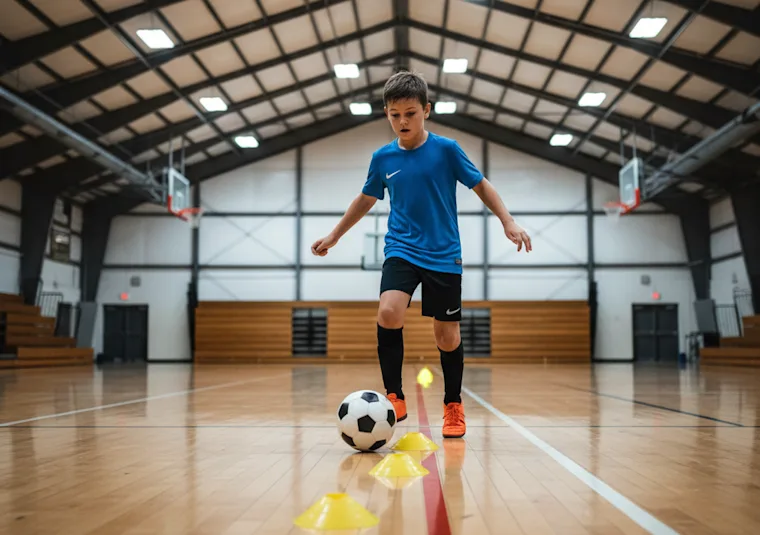
Parents comparing indoor and outdoor soccer training are usually asking a bigger question: What environment will help my child enjoy soccer, feel confident, and actually improve?
Both indoor and outdoor soccer training can be valuable. The right choice depends on your child’s age, personality, and what they need most at their current stage of development. Understanding the key differences can help you decide with clarity and confidence.
What Parents Are Really Deciding Between
When families weigh indoor vs outdoor soccer training, they are often comparing more than just location. Common considerations include:
- Safety and comfort
- Reliability and scheduling
- Learning environment
- Pressure and expectations
- Fit with family routines
Looking at each option through these lenses makes the decision much clearer.
Outdoor Soccer Training: Strengths and Limitations
Outdoor soccer programs are often connected to leagues, parks, or school fields. They introduce children to larger playing spaces and, in many cases, game-based scenarios.
Outdoor training can be a good fit for:
- Older children comfortable with competition
- Players preparing for league or team play
- Families who enjoy a traditional sports structure
However, outdoor training also comes with challenges, especially for younger players. Weather disruptions, uneven fields, and environmental distractions can interrupt learning. In hot, cold, or storm-prone regions, cancellations and shortened sessions are common.
For some children, these variables are manageable. For others, they can make soccer feel inconsistent or stressful.
Indoor Soccer Training: A More Controlled Environment
Indoor soccer training takes place in climate-controlled facilities designed for consistency and focus.
Key characteristics include:
- Reliable scheduling year-round
- Comfortable temperatures regardless of season
- Consistent playing surfaces
- Fewer environmental distractions
Because conditions are predictable, sessions can focus more on skill development and repetition. This often helps young players feel more confident and engaged, especially those who are newer to the sport.
Indoor vs Outdoor Soccer Training: A Side-by-Side Comparison
Consistency
Indoor training runs as scheduled, regardless of weather. Outdoor training depends on field and weather conditions.
Comfort and Safety
Indoor facilities reduce exposure to extreme heat, cold, and uneven surfaces. Outdoor environments vary widely by location.
Learning Focus
Indoor training often emphasizes technical skills, repetition, and confidence. Outdoor training may balance skills with preparation for games or competition.
Pressure Levels
Indoor programs tend to be lower pressure, particularly for younger children. Outdoor programs may introduce competitive expectations earlier.
Flexibility for Families
Indoor training often allows for easier entry points and fewer long-term commitments. Outdoor programs may require seasonal registration.
Which Option Works Best by Age?
For children ages 4–8, indoor soccer training is often the better fit. At this stage, children benefit most from repetition, structure, and encouragement. Comfort and routine play a big role in how confident they feel.
For children ages 9–12, the right option depends on the individual child. Some enjoy combining indoor training with outdoor team play. Others continue to thrive in development-focused indoor environments before transitioning to leagues.
There is no single correct path. The best choice is the one that supports your child’s confidence and enjoyment.
It’s Not an Either-Or Decision
Many families find that indoor soccer training and outdoor play can complement each other. Indoor training builds strong foundations in skill and confidence, while outdoor play provides opportunities to apply those skills in different settings.
Using indoor training as a foundation often makes outdoor experiences more positive and less intimidating for young players.
How to Decide What’s Right for Your Child
When choosing between indoor and outdoor soccer training, consider asking:
- Does my child enjoy routine or variety?
- How do they respond to heat, cold, or unpredictable conditions?
- Do they need confidence-building or competition right now?
- What fits our family’s schedule and stress level?
Programs that meet children where they are tend to create better long-term outcomes.
Seeing the Difference Firsthand
Reading comparisons can help, but seeing how your child responds to an environment often provides the clearest answer.
AtWe Make Footballers, many of our locations are indoor, climate-controlled soccer facilities designed to support young players through consistent, development-focused sessions.
A free trial session gives families a low-pressure way to experience indoor training and decide whether it’s the right fit for their child, right now.
Related Articles
Why Indoor Soccer Training Is Better for Young Players
Indoor soccer training provides a safe space for young players to build skills and confidence.
5 Indoor Soccer Drills to Keep Your Kids Active Over Winter Break
Keep kids' soccer skills sharp over winter break with 5 fun indoor drills using household items.
Winter Soccer Training for Kids 2025: What Parents Should Know
Keep kids active this winter with fun, futsal-inspired indoor soccer training at We Make Footballers.