

Repetition: Why Practice Makes Permanent
Is there a purpose to the repetition rather than doing the same task simply for the sake of it? We believe that in fact, practice makes permanent - and that might not always be perfect. This is why regular soccer training under the guidance of expert coaches is so important for your child.
WMF Coaching Team
4 min read
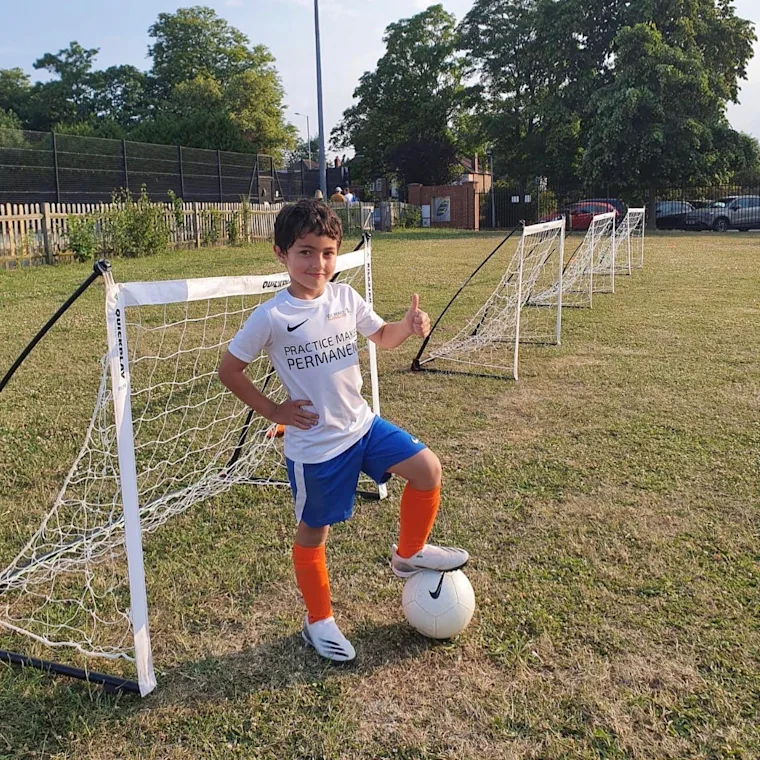
You’re probably familiar with the saying “practice makes perfect”. As sayings go, we would largely disagree. We believe that in fact, practice makes permanent - and that might not always be perfect. This is why regular soccer training under the guidance of expert coaches is so important for your child.
One of the most effective ways in which children learn is through repetition. Whether it is playing the piano, riding a bike or scoring goals with their weaker foot, repeatedly practicing the same action over and over hardwires it into the brain. At We Make Footballers, this is the practice that makes permanent ethos that underlies all we do.
But the word “repetition” especially in the context of younger children can be synonymous with the word “boring”. So how do we then make repetitions fun, ensuring that our players get the practice they need to achieve their potential without becoming bored and having their enthusiasm for the game dampened?
Why Is Repetition Important?
Before we get into that, it is helpful to understand the importance of repetitions. The science is well established. At its most basic level, the more that a person repeats a task, the more efficient their neuron cells responsible for transmitting information become. These cells talk to each other as well as send signals to the muscles needed to perform a skill. The faster the response, the better chance of success.
Say a soccer player is in a tight spot, marked by an opponent on the touchline. If neuron cells are responsible for alerting the brain to where the space is into which they can exit quickly transmit that information to the neuron cells that fire the muscles required for a Cruyff turn out of the situation, the chances of getting away are greatly improved. Repeatedly practising Cruyff turns would have trained those neurons for that exact scenario.
Hardwiring Skills
Hours of practice is what enables the likes of Lionel Messi, Cristiano Ronaldo and Neymar to look so effortless when they play soccer. Their brains and muscles have become hardwired to produce moments of outrageous skill at the drop of a hat through constant repetitions on the training pitch.
Performing flicks and tricks comes as second nature to Neymar because of years of mastering skills. Messi does not have to think about the process needed to control a ball on his chest, turn and hit a half-volley with their back to goal into the top corner. He has done it so many times on the training ground that it is easy.
Ronaldo can jump higher than anyone else because his timing is impeccable and his muscles fire and react to produce the optimum leap. That comes from practice, practice and more practice.
Making Repetition Fun
Children aged between 4 and 12 are not going to have the same patience or the willingness to go through the often tedious process of repetitions as Messi, Ronaldo, Neymar. This is why We Make Footballers uses an approach which cleverly (if we do say so ourselves), encourages repetition in a way that children will barely even recognise that this is what they’re doing.
For younger children at our academies, our coaches take the powerful imagination of this age group and use it to our advantage. Children are not asked to practice drag backs for 15 minutes; they have to perform drag backs to escape pirate ships, avoid deadly lava or get away from their coach who has suddenly turned into an alien.
For older children, we employ different methods as they’re less easily tricked. Instead, we use their competitive nature and need for motivation to set them challenges with specific targets to achieve. How many goals can they score with their weaker foot? How many times can they successfully get past a man using a stepover in a set time? If there is a purpose to the repetition rather than doing the same task simply for the sake of it, then it suddenly becomes much less boring.
Most important of all in ensuring that repetitions and soccer are not boring however is the attitude of the coach. When a coach speaks in a boring tone or does not believe that the session they are delivering is fun, then that quickly translates to their players who adopt a similar attitude.
Every coach atWe Make Footballers is enthusiastic, the result being their passion rubbing off on the players. The best way to ensure that a child learns and wants to keep coming back every week is by making soccer fun.
When you ask your child if they want to sign up for another block of sessions with We Make Footballers, we want them to think back to all the adventures they have had with us. Cruyff turning their way out of a volcano is what they will remember; not the fact they repeated 50 Cruyff turns in a session, to the point where they can now reel the skill off without even thinking about it.
By making sessions as fun as possible, We Make Footballers do everything that we can to eliminate the chances of your child being bored. That helps them reach their potential via our practice makes permanent ethos.
Related Articles
Competitive Soccer Teams and Player Development in Brynmawr | We Make Footballers
Discover the competitive soccer pathway available through We Make Footballers Brynmawr and WMF Gwent, helping young players develop their technical ability, confidence and match experience.
Soccer Classes for 4-Year-Olds in Blackwood | Parent’s Guide
Looking for soccer classes for a 4-year-old in Blackwood? Discover what to expect, whether your child needs experience and how We Make Footballers helps young players get started.
Competitive Soccer Teams and Player Development in Ebbw Vale | We Make Footballers
Discover the competitive soccer pathway available through We Make Footballers Ebbw Vale and WMF Gwent, helping young players improve their technical ability, confidence and competitive match experience.