

Train Soccer Skills by Yourself: Best Solo Drills
Take your skills to the next level on your own terms. Learn our top individual soccer drills for improving your first touch, footwork, and confidence with the ball. All you need is a ball and some space.
WMF Coaching Team
8 min read
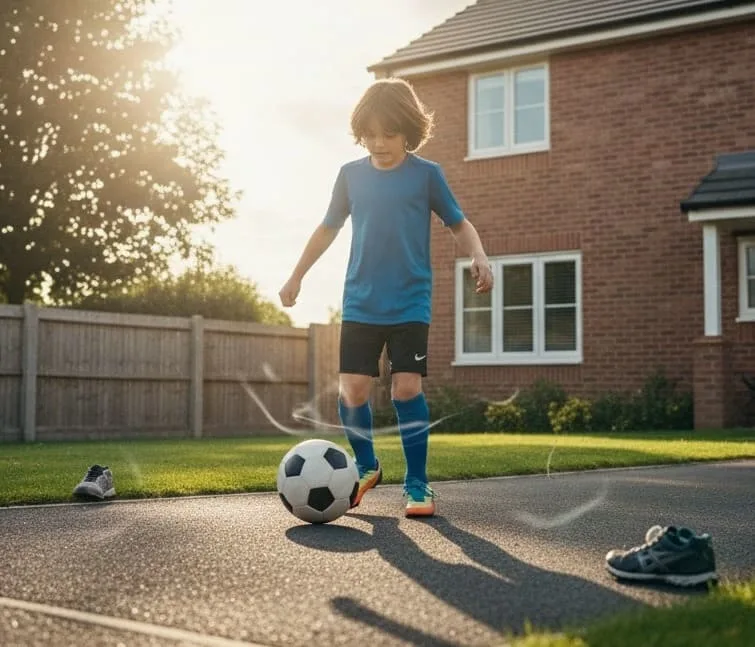
Train Soccer Skills by Yourself: The Ultimate Guide to Solo Drills
Why Train Soccer Skills Alone?
Some of the best footballers didn’t learn the game in perfect conditions. They learned with a ball, a wall, and a little space. When there’s no team session, no coach available, and no one else around, that’s when the real learning often begins. That’s why soccer drills to do by yourself are so powerful.
To train solo is to take ownership of your development. You get to target your weaknesses, repeat what matters, and control your pace. And you don’t need a fancy pitch or expensive equipment. Just a ball, some ground, and the drive to move forward.
Learning soccer skills to practice on your own gives you freedom as a player. You can improve your touch, drip with sweat during conditioning, get sharper in your movement-and it’s just you and the ball keeping score. For kids, it’s a chance to learn independence. For parents and coaches, it's a way to support training even when structured sessions aren’t possible.
At We Make Footballers, individual progress is built into everything we do, especially during our small-group coaching. These solo drills are part of that journey.
What You Need for Solo Soccer Training
Training doesn’t have to start with cones or gadgets. If you’re serious about improvement, home soccer drills are more about commitment than gear. That said, here’s what helps:
- A size-appropriate soccer
- A safe, flat surface (outdoor area, garage, living room with control)
- 4–6 markers (cones, water bottles, shoes, sticks - anything works)
- Optional: wall, fence, rebounder, or even a hanging ball tether
Whether it’s soccer training at home, in a garden, or your local park, the goal is the same: get more touches, more control, more movement - and fewer excuses not to play.
Warm-Up and Footwork Drills
Every session should start with movement. If your feet aren’t ready, your first touch won’t follow. Proper soccer footwork drills get your heart rate up, prepare your ankles and knees, and tune your brain into the rhythm of play.
Ball-Free Footwork (2 rounds)
- Two-foot hops over a line for 30 seconds
- Lateral shuffles between cones for 30 seconds
- One-foot balance holds (each leg, 15 seconds)
- Quick forward-to-backward sprints (3 metres)
Rest briefly - reset your mind, then go again.
Fast Feet Around the Ball (2 mins x 2)
- Place the ball in place
- Step around it in a fast circle
- Do 20 seconds right foot lead, 20 seconds left
These are simple soccer workouts at home that tighten control and improve game-day agility.
Ball Control and Touch Drills
If you want the ball to obey you in a match, you have to master it daily - without an opponent. Building tight control is the heart of soccer training drills.
Wall Control Rebounds (2 mins x 3)
- Stand 3m from a wall
- Kick the ball firmly -> control with inside foot -> reset and go
- After 10 solid reps, switch feet
- Then reduce to one-touch only
This is one of the best individual soccer drills in the world. It sharpens not just the feet, but your rhythm and judgement.
Cone Pull-Through Touches (3-minute sets)
- 5 cones in a line, 50cm apart
- Thread the ball through using the inside or the sole
- Back and forth without losing focus
- Keep knees bent, back straight
Tight Space Control Grid
- Create a 2×2 metre grid using any markers
- Dribble freely within the “cage” using touches from both feet
- Mix toe touches, sole rolls, inside cuts
- Add commands like “fast feet” or “freeze and balance” to challenge focus
This kind of confined repetition is excellent for basic soccer training drills, encouraging players to stay calm and reactive in limited space - just like in matches when pressure closes in.
Passing Drills Without a Partner
You don’t need a teammate to improve your pass. Use angles, surfaces, and rebound techniques creatively - and develop deadly precision with soccer drills on your own.
1-Touch Zone Passing
- Using a wall, mark a square with tape or chalk (approx. 1m x 1m)
- Stand 4m back
- Try to strike the ball so it rebounds cleanly back into the zone
- Alternate feet
- Challenge: 5 perfect returns in a row equals one “goal” – how many can you score in 5 minutes?
This teaches you soccer skill practice through repetition, keeping your body and contact tight and efficient.
Triangle Target Drill
- Set up three cones in a triangle shape, 2m apart
- Pass from cone A to B, sprint to cone C
- Return to cone A, but vary technique: inside foot, laces, or outside
- This cycle sharpens fitness and technical touch
This is based on 1 on 1 soccer coaching drills - it mimics real game movements and habits we develop in structured academy sessions.
Fitness and Conditioning at Home
Improving your solo game isn’t just about the ball - it’s about building the body that carries the ball. These soccer workouts at home can massively improve your engine.
Speed + Strength Routine (3 rounds)
- 25 jumping jacks
- 15 high-knees
- 10 lateral squats
- 30-second plank
- 10-foot hops (forward + back)
- Rest 1 minute - repeat
Add soccer movements where possible: ball shuffle between reps, jump with the ball, or finish each circuit with a 30-second sprint dribble. Conditioning should always be soccer-focused.
Soccer Drills for Small Spaces
Stuck indoors or in a tight city garden? No problem. These soccer basic drills are designed to work in less than 3 square metres.
Box Dribble and Turn Drill
- Create a 1.5x1.5 metre box
- Dribble through with fast, soft touches
- At each corner, perform a turn: drag back, Cruyff, step-over, sole turn
- 10 circuits without error is your target challenge
Rebound Wall Pressure Drill (2x3 mins)
- Stand 3m from a wall
- Pass with your right foot, control with your left
- Immediately alternate: left-foot pass, right-foot control
- Increase speed until it becomes one-touch
- Add side shuffles while moving between passes
This drill builds precision and balance under stress - a core part of soccer training at home that prepares you for unpredictable game situations.
How to Structure a Solo Training Session
Structure turns solo training from just “kicking a ball around” into meaningful progress. Here's how to format effective soccer personal training sessions - whether you're eight years old or playing at academy level.
Sample 45–60 minute session layout:
- Warm-Up & Footwork (10 mins)
- Toe taps, high knees, shuffle patterns
- One-ball movement work (small-space cone touches, dynamic stretches)
- Technical Block (15–20 mins)
- Home soccer drills: wall rebounds, cone dribbles, box control
- Focus: ball control, passing angles, footwork under pressure
- Main Focus Drill (15 mins)
- Select a challenge area (e.g., weak foot passing)
- Choose 1–2 matching drills from earlier
- Track improvement (touch counts, one-touch percentage)
- Fitness & Recovery Movement (10–15 mins)
- Mobility + soccer-specific body weight work
- Short sprints or reaction jumps - even in a hallway (e.g., sprint 3m to grab a cone)
- Juggling Finisher (5 mins)
- Challenge yourself to beat your best
- Add variety: thigh left/ right, foot-only, sole stops
By ending high-energy and goal-focused, players leave every at-home session feeling sharper and stronger - mentally and physically.
Parents can support by helping set simple challenges (“Let’s see if you hit the wall zone 8 times in 30 seconds”). Coaches may even assign themed drills to players, connecting individual soccer drills with broader team development.
Conclusion
Soccer doesn’t stop when practice ends, and development doesn’t need a pitch. With the right attitude and a focused plan -with the right attitude and a focused plan, players can grow every day, no matter where they are. The truth is, you don’t need a stadium to improve. You need space, a ball, and the will to train soccer skills regularly and purposefully.
The drills, routines, and ideas in this guide are more than quick fixes - they’re a system for independent growth. Whether you're working in your back garden, a quiet park, your driveway, or a small indoor space, there are always ways to get better.
Soccer drills to do by yourself put the responsibility in your hands. They teach discipline, nurture creativity, and sharpen your body and brain for game situations. The repetition builds confidence. The decisions - when to cut, when to pass, when to move - become faster and more instinctive because you've built the habits on your own.
Most importantly, solo training empowers young players to believe they can take control of their progress. At We Make Footballers, we encourage this kind of self-led mastery early on. Our small-group format gives players everything they need to take what they learn and apply it again (and again) during their soccer training at home.
Every touch matters. Every bounce off the wall is a decision made faster tomorrow. Every five-minute routine you repeat today becomes second nature on match day.
Don’t wait for training to start. Start now. Start with you. Push your level - on your terms - and watch what happens. That’s the power of training soccer skills by yourself.
Related Articles
Why So Many Children Lose Confidence in Soccer (And How the Right Environment Changes That)
Thousands of UK children lose their love for soccer each year. Discover why confidence fades in youth soccer environments and how the right coaching approach can reignite passion, build skills, and keep children…
Soccer Training vs Soccer Teams: What’s Better for Young Players?
Parents often wonder whether soccer training or soccer teams are better for young players. This guide breaks down the key differences to help you choose the right path for your child’s development and enjoyment.
Mastering the Pass Back Rule: Learn from the Experts
Do young players panic with a back pass? This guide explains the rule clearly, covers common mistakes, and shows how to train smart decision-making to turn pressure into possession.